
The Joy (and Jeremy) of Cider
Featured in this post
In early March, home cider makers Joy Doumis and Jeremy Hammond joined the panel of Beer Sessions Radio (TM) to spread the word about America's first beverage.
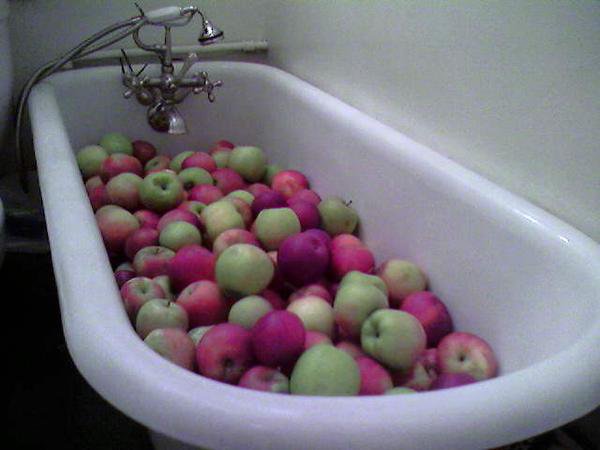
Joy and Jeremy brought in a selection of delectable ciders made in their Brooklyn home from locally sourced apples. Jeremy used his knowledge from his time in France working with wine makers to develop their home cider making process which currently yields a little over 100 gallons of cider each year.
The cider making season begins in late August and stretches to Thanksgiving, allowing Joy and Jeremy to harvest, sweat, wash, chop, grind, press, and ferment, their ciders. In 2010, Joy says they picked 21 different varieties which added up to 1600 pounds of apples. Joy was kind enough to break down the process for us this way:
** Harvest:** Each apple is chosen for a different job; sweet, aromatic, tart, astringent, etc. I like to stick with the older apples because they have amazing complex flavors that just aren't present in newer/popular apples… some of them taste like poison but make pretty amazing juice!
** Sweat:** We let the apples sit for about 2 weeks after picking. We to this to develop the apple sugars and concentrate the flavors.
** Wash and Chop:** We deal with a lot of small orchards using organic methods and aren't sure what protein is going to add to the final product. So, we wash all the apples and at least quarter them to determine whether they have a resident and so that they can fit into the grinder hole.
** Grind:** a home-built modified garbage disposal.
**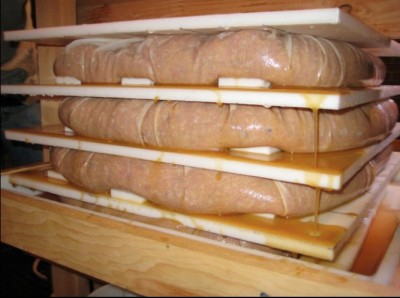 *Pressing Apples ***
** Press:** a steel shop press. Pulp gets folded into cloth, stacked between plates of HDPE, pressure is applied with a hydraulic jack and the juice is collected in 25 gallon brew buckets.
** Ferment:** We use wine yeast and basically re-hydrate it and pitch it in the juice. Primary fermentation takes place in plastic buckets or an oak barrel. When primary is over, we rack off to glass carboys or the stainless steel tank.
** Taste and Blend Juice: A ** round March everything has pretty much dropped clear and this is when we start tasting and considering our different blends. We really only started blending in the past few years as we moved into using heritage and true cider apples. Another reason is that we are dealing with different apples that have all been picked and pressed at different times, and in different quantities, that sometimes even age differently.
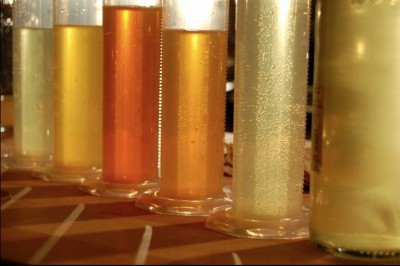 *Tasting and Blending Ciders*
** Bottle:** We bottle as much as we can when we have time and have enough bottles.
The resulting ciders are complex, flavorful and definitely something to talk about! If you want to know more about this urban cider making duo, tune in to Episode 53 of Beer Sessions Radio (TM).
Thank you to Joy and Jeremy for the wonderful ciders and the great pictures! For more information about Joy and Jeremy check out their Slanty Cider page on Facebook.
Also mentioned
Originally published at https://goodbeerseal.com/2011/04/06/the-joy-and-jeremy-of-cider/